And why nobody should be surprised
The Generation Nobody Noticed Burning Out
There is a quiet movement happening. Not a protest, not a manifesto, not a trending hashtag. Generation X, those born roughly between 1965 and 1980 and now in their mid-40s to late 50s, is simply stepping back. From careers. From social media. From the relentless forward momentum the modern world demands. From the system itself.
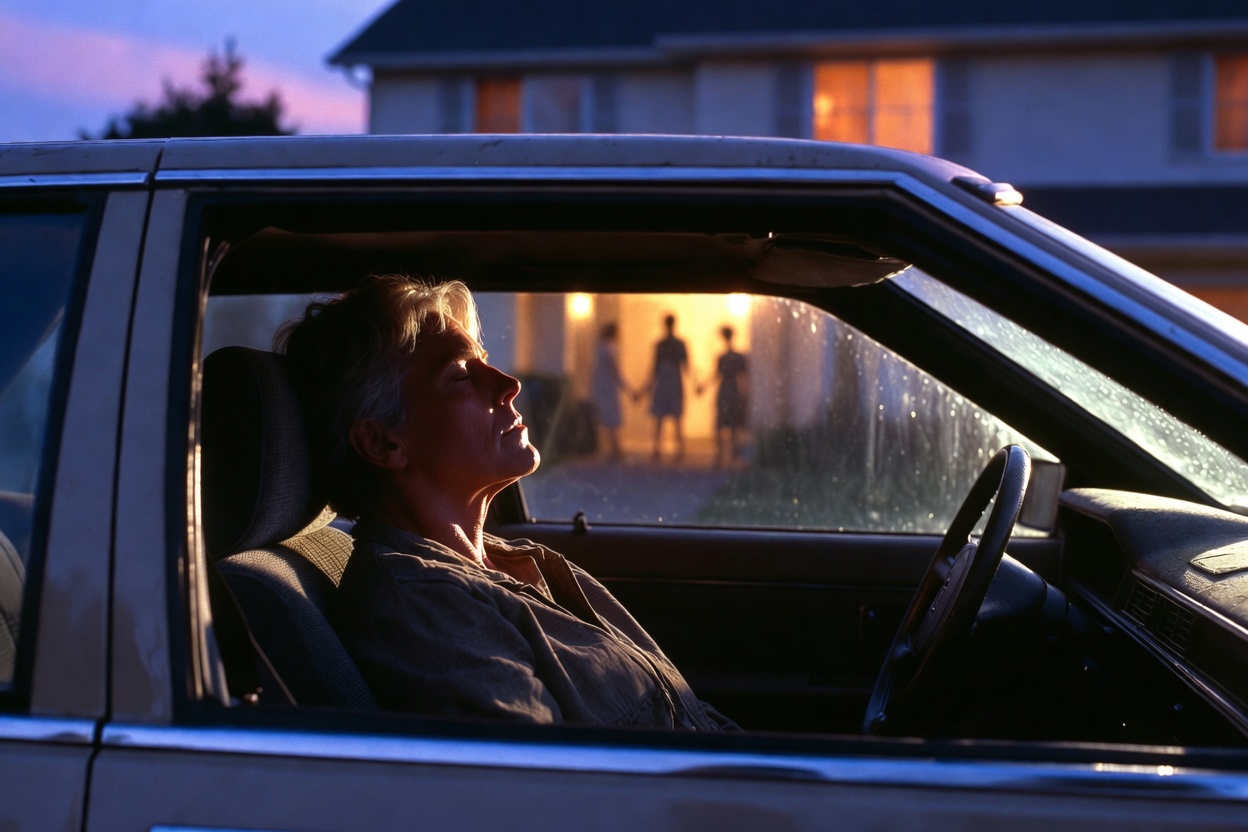
They are not collapsing dramatically. They are not announcing it loudly. That was never the Gen X way. Instead it looks like sitting in the car for five minutes before going inside. It looks like a slow withdrawal from forums, from feeds, from the performance of participation. It looks like a person who has done the maths and quietly concluded that the numbers no longer add up.
This is not laziness. This is not a midlife crisis. This is a rational response to an irrational system, and it has been building for thirty years.
Who Gen X Actually Are
To understand the opt-out, you have to understand the generation.
Gen X grew up without the internet. They learned to be bored productively, cardboard boxes, bikes with no helmets, afternoons with no supervision and no schedule. The parenting philosophy of the 1970s and 80s was essentially: are you bored? Go outside. Are you hungry? There's cereal. They were the latchkey kids, home alone, figuring things out independently before anyone coined the term self-reliance.
They were raised to cope. That was the entire brief.
This shaped them profoundly. Gen X does not announce overwhelm. They do not collapse onto metaphorical chaise longues and declare themselves broken by the crushing futility of modern existence. Instead the burnout is quieter and more internal, showing up as a creeping inability to care about things that used to matter, a bone-deep tiredness that a good night's sleep doesn't touch, a growing suspicion that the deal they signed up for was never real.
They watched their parents work hard, follow the rules, and mostly get something back for it. They were told the same would apply to them. It did not.
There is also something that gets overlooked: Gen X built the foundations of much of what the modern world runs on. The infrastructure, the institutions, the digital frameworks, the working culture that everyone now inhabits. That contribution has been quietly forgotten, or simply taken for granted. Younger generations criticise what the world has become without acknowledging who built it or what it cost to do so.
The Deal That Was Never Honoured
Generation X entered the workforce with a set of expectations: work hard, stay loyal, develop expertise, and receive stability, fair reward, and eventual security in return. What they received instead was a catalogue of economic shocks that systematically dismantled each of those promises.
The dot-com crash. The 2008 financial crisis. Wage stagnation across decades. The erosion of pensions. The housing market becoming structurally inaccessible for many. The pandemic. Rising inflation. And now AI-driven disruption threatening to erase entire categories of work that Gen X spent decades mastering.
Each crisis asked the same thing of them: adapt, absorb, keep going. And they did. Every time. They made the transition from analogue to digital. They retrained. They updated their skills. They absorbed the redundancies and the restructures and the new management philosophies and the hot-desking and the open-plan offices and the endless parade of corporate initiatives with names like alignment and synergy and agile transformation.
And then in their late 40s and 50s, many found themselves being quietly pushed aside for younger, cheaper workers, or watching their hard-won expertise rendered apparently obsolete overnight by technology or by a culture that no longer values depth over speed.
Many Gen Xers also bought into the idea that going the extra mile would be rewarded. Working late, taking on more than was asked, covering gaps that nobody else would fill. In practice what that usually produced was simply more work, or worse, a written warning when the extra work was eventually refused as unsustainable. The real currency in most workplaces turned out to be who you knew rather than what you knew. That is a lesson that took a career to learn.
Companies no longer offer the job security that once made loyalty rational. Hire and fire at short notice is standard practice now. You are not part of a team in any meaningful sense. You are a number on a spreadsheet that happens to be useful today and may not be tomorrow. Once that reality sinks in, the question of why anyone would give everything to such an employer becomes very hard to answer.
After thirty years of adapting on demand, the reasonable question becomes: what exactly was the point?
The Health Reckoning
Nobody warned Gen X about the physical bill that would eventually arrive.
Decades of chronic stress have a measurable biological cost. Elevated cortisol, persistent inflammation, cardiovascular strain, disrupted sleep, compromised immune function. The body keeps score whether or not you acknowledge it. For a generation that was raised to cope without complaint, the acknowledgement often comes late, when the damage is already significant.
For many Gen Xers the health reckoning arrives in their late 40s and 50s not as a single dramatic event but as a gradual narrowing of capacity. The energy they relied on to manage two roles, a household, ageing parents, and their own needs simply stops being available. Pain that was manageable becomes constant. Recovery that used to take a weekend starts taking weeks.
There is a widespread assumption that people routinely live into their 80s and 90s in good health. The data no longer supports this. According to the UK Office for National Statistics, healthy life expectancy in the UK has now fallen to around 60.7 years for men and 60.9 years for women, the lowest recorded since tracking began in 2011. That means the average person in the UK can expect to be living with significant health limitations before they even reach the current state pension age of 66. The Health Foundation reported in 2026 that healthy life expectancy has now fallen below state pension age in more than 90% of local areas across Great Britain. In some of the most deprived parts of the country, such as Blackpool, healthy life expectancy for men sits at just 50.9 years.
It is also worth noting that while total life expectancy figures have recovered slightly after the pandemic, the years people actually feel well enough to live fully are going backwards, not forwards. The gap between total lifespan and healthy lifespan now stands at roughly nine to ten years on average globally, according to WHO data. The uncomfortable truth is that for a growing number of people, the trajectory looks less like living to a ripe old age and more like a long decline that begins well before the state will allow you to stop working.
Within Gen X's own social circles this is visible in a way the official statistics do not fully capture. Friends, family members, and peers dealing with serious medical conditions in their 40s and 50s is no longer unusual. Cancer, heart disease, autoimmune conditions, chronic pain from decades of physical work. Not everyone is making it to 80.
Work until you drop is not a figure of speech for a growing number of people. It is a literal description of the trajectory on offer.
The Retirement Age Con
While Gen X was busy adapting to one economic crisis after another, governments were quietly and repeatedly moving the goalposts on retirement. This did not happen in one visible announcement. It happened through a series of incremental legislative changes that each seemed individually reasonable but cumulatively amounted to a significant extension of the working life that Gen X had originally planned around.
In the UK, the state pension age for women was 60 for decades. From 2010, it was progressively raised to 65, then to 66 for both men and women by 2020. It is now rising to 67 between 2026 and 2028, affecting everyone born after April 1960. There are already proposals that could push it to 68 earlier than the currently legislated 2044 date, potentially as soon as 2041. One independent review suggested it could eventually reach 69 and beyond if current trends continue.
Between 1948 and 2010, the state pension age for men did not change at all. It sat at 65 for 62 years. In the 15 years since, it has risen twice and is about to rise again. The pace of change has accelerated sharply, and the direction only ever goes one way.
Now set that against the healthy life expectancy data. If the average person in the UK can expect to be in good health until around 61 years old, and the state will not pay a pension until 67, there is a six-year gap in which many people are expected to keep working despite their bodies already starting to give way. For people in physically demanding jobs, that gap is not theoretical. It is daily pain.
The WHO's own data shows that globally, health-adjusted life expectancy sits at around 63 to 64 years on average. The UK state pension age is about to be 67. The maths is not complicated. The system is asking people to work for several years beyond when their health typically allows them to do so comfortably, and calling it a reasonable policy response to an ageing population.
The Time Poverty Trap
Ask a Gen Xer what they want and the answer, honestly, is not luxury. It is not golf or foreign holidays or some fantasy of perpetual leisure. What they want is control over their own time. The ability to decide what Tuesday looks like. To go for a walk at 2pm without having to put it in a shared calendar as a wellbeing block.
But time is precisely what the system extracts most completely.
The weekday belongs to work. The weekend belongs to recovery and maintenance, shopping, bills, household chores, the unpaid administrative labour of keeping a life functional. By Sunday evening the cycle is already starting again. There is no genuine recharge in this rhythm, only the illusion of one.
What people describe when they talk about wanting to retire early is not idleness. It is the desire to stop doing things that drain them for people who do not appreciate it, in exchange for a salary that stopped feeling meaningful years ago. Strip it all back and the retirement fantasy is simply this: I want to live a life I chose, rather than one that just happened to me while I was busy being responsible.
Even the things that are supposed to provide relief now carry their own overhead. A walk in the local park should be simple enough. But first there is the drive, the parking, the other people, the noise. In one example that became a minor local flashpoint, a council put up signs telling people to stop feeding the ducks bread, prompting months of arguments between residents, wildlife groups and local authorities before the signs were eventually taken down. What had been a straightforward, peaceful activity became a source of stress and conflict. That is a small example but it captures something real: the cumulative friction attached to things that used to be effortless is relentless. Rest is not restful anymore.
The trap is that financial reality makes even the modest wish to slow down feel impossibly out of reach. There are no reserves. There is no redundancy cushion. Stepping back from even one income stream has immediate and serious consequences. So the grinding continues, not from ambition or satisfaction, but because the floor would disappear without it.
The World That Changed Around Them
Generation X grew up in a world with a different set of baseline assumptions. One income could sustain a household. A single working parent could pay a mortgage, raise children, and keep the lights on. The other parent, typically the mother, could be present at home, managing the domestic environment and raising the children directly without needing to outsource everything or schedule it around two competing work calendars.
That world is gone. And its disappearance has never been properly acknowledged as the seismic shift it actually was.
Today it takes two people working full time simply to meet basic costs. Housing, energy, food, insurance, childcare. The baseline expenses of an ordinary life have inflated to the point where a single income is no longer a lifestyle choice but a financial impossibility for most households. The result is a compounding cascade of pressures that previous generations simply did not face in the same form.
Children still need to be raised. Households still need to be maintained. The chores, the cooking, the school runs, the appointments, none of that disappeared when both adults entered full-time employment. It simply became an additional unpaid burden on top of the paid work, squeezed into the margins of already exhausted days. Or it gets outsourced to cleaners, childminders, convenience food, and delivery services, which costs more money, which requires more work to earn, which leaves less time and energy for everything else. The loop has no exit.
The housewife, for all the complicated politics around that word, represented something practical: a person with time and energy to cook real food, to be present for children, to keep a household functioning without everything being a transaction. That role is largely gone now. Not because anyone decided to abolish it, but because the economics made it unsustainable. The result is that home-cooked meals have become a luxury rather than a daily default. Ready meals, fast food, and takeaways fill the gap. It is quicker, it is easier, and over time it compounds the health problems that are already mounting from everything else.
The children in this equation grow up with less direct parental presence and more screen time as a substitute, and then get criticised, not entirely unfairly, for the outcomes of that environment. Nobody names the structural cause clearly: the economic conditions forced both parents out of the home, and the children largely raised themselves as a result. The consequences of that are visible in supermarkets and schools every week.
This is not nostalgia for a simpler time. It is an accurate description of a specific deterioration in the conditions of ordinary life that happened within living memory, and that Gen X watched happen in real time.
The Social Media Toll
Generation X came to social media as adults, not as natives. They arrived with the social habits of a pre-internet world, where asking for help meant getting help, where disagreement was direct rather than performative, where community meant something with actual weight behind it.
Some of early Gen X will remember something that predates even the early internet: ham radio. People would sit at home and speak to strangers on the other side of the world. Real conversations, real curiosity, genuine connection across borders with no particular agenda involved. It was a community built on shared interest and good faith. The early internet carried some of that spirit. Forums where people helped each other, information shared openly, a sense that the technology was in service of human connection.
What exists now is almost unrecognisable by comparison. Influencers and content creators ask their audiences the right questions, post about struggles and pain, rack up tens of thousands of replies, and then move on to the next post. People's real experiences and genuine distress disappear into the scroll. Nobody at the top of those platforms is actually listening. What looks like engagement is ratings, clicks, and rage bait. The suffering of real people becomes content that inflates somebody else's follower count. People think they are being heard. They are not.
What they found in place of the old community was a machine optimised for engagement through outrage. You share expertise, you get sarcasm. You ask a genuine question, you get ignored or attacked. You contribute years of hard-won knowledge to a forum and watch someone with a thirty-second TikTok clip get treated as the authority.
The manipulation is not subtle once you see it. Algorithms reward conflict over substance. Platforms are built around the psychology of comparison and validation-seeking. The noise is relentless and the signal increasingly hard to find. Talk to the wrong person and you can find yourself in serious trouble far too easily. The old days of anonymous good-faith conversation are over.
Gen X knows what genuine online community felt like before all of this. That knowledge makes the current reality harder to tolerate, not easier. And so quietly they are leaving. Not with a dramatic announcement, that was never their style, but with a gradual withdrawal. Some are even wondering whether the older ways might eventually come back into fashion. Ham radio communities are still active. The appeal of connecting with real people through a medium that does not track, monetise, or algorithmically manipulate you is not hard to understand.
The retreat from social media is not antisocial. It is a protective response to an environment that extracts energy and returns very little.
The Information Environment Has Become Toxic
The internet was once something different. In its earlier form it was genuinely a place to connect, explore, and decompress, with forums where people helped each other, communities built around shared interests, and information shared in good faith. Gen X was there for that version. They know what it felt like.
What exists now is almost unrecognisable by comparison.
Media outlets discovered that fear, outrage, and anxiety drive engagement more reliably than anything else. The twenty-four hour news cycle delivers a continuous feed of catastrophe, conflict, and manufactured controversy. Algorithms surface the most inflammatory content because inflammatory content keeps people scrolling. Social media platforms are not optimised for connection or wellbeing but for time-on-platform, and that turns out to be maximised by conflict and comparison.
The result is an information environment that is actively hostile to mental health. Not incidentally hostile but structurally, deliberately hostile, because hostility is profitable.
Misinformation compounds the problem. Distinguishing reliable information from deliberate fabrication has become a full-time job that nobody has time for. Trust in institutions, media, and public information has collapsed, not irrationally, but in direct response to those institutions repeatedly proving themselves untrustworthy. Trying to find solid ground in a swamp of competing claims and hidden agendas is exhausting. And it never ends.
Gen X, who remember when the internet was a place to decompress rather than a source of additional stress, have responded in the most rational way available: they are leaving. Stepping back from social media. Disengaging from the news cycle. Withdrawing from online spaces that extract energy and return anxiety. This is not ignorance or apathy. It is a protective response to an environment that has become genuinely damaging to inhabit.
Governments Adding Pressure Rather Than Relieving It
Layered on top of all of this is a political and institutional environment that seems constitutionally incapable of making things simpler or more stable.
Tax rules change. Benefits systems change. Pension ages move. Employment regulations shift. Planning rules, energy policies, healthcare provision, local services, the frameworks that people organise their lives around are in constant flux, requiring constant attention and constant adaptation. Each change may have a stated rationale but cumulatively they represent an unending administrative burden on households that are already at capacity.
One of the most consistent government responses to financial pressure over the past several decades has been to raise taxes. The logic appears sound in isolation: more revenue means more spending power. But when the entire economy raises prices at the same time, the result is simply that money buys less. Taxes go up, costs go up, wages do not keep pace, and the average household ends up worse off despite earning more on paper. Successive governments have struggled with this cycle without breaking it.
What actually generates a healthy economy is jobs and productive small businesses. The pandemic demonstrated this painfully. According to the Office for National Statistics, the number of businesses in the UK dropped by around 400,000 in 2020 alone, the largest single-year decline in twenty years. By 2024, the UK had lost roughly 500,000 small businesses compared to pre-pandemic levels, according to the Federation of Small Businesses, with sole traders and one-person operations hit hardest. Large corporations largely survived or grew. The small independent businesses that give local economies their character and resilience, many of which had been operating for decades, simply disappeared. Nobody seems to have fully reckoned with that loss.
When governments have less money they raise taxes again, which puts further strain on the businesses that survived, which reduces employment, which reduces tax revenue, which leads to further tax rises. The cycle is self-reinforcing and the people at the bottom of it, the working households trying to stay afloat, absorb the cost of every iteration.
For a generation already running on depleted reserves, the demand to continuously track and adapt to moving goalposts set by institutions that rarely appear to be acting in their interests is simply one pressure too many. The trust required to engage constructively with these systems has been exhausted. And so another quiet withdrawal happens, not from apathy but from the rational calculation that the return does not justify the cost.
Healthcare: The Door That No Longer Opens
There is a particular cruelty in declining health coinciding with a healthcare system that has become increasingly difficult to access.
Gen X is at the age where things start to go wrong. Joints that absorbed decades of physical work begin to protest. Chronic pain becomes a daily companion. The cumulative effects of stress, poor sleep, and a body run hard for thirty years begin to manifest as conditions that need attention. This is not unusual or unexpected, it is the predictable biology of midlife.
What is not acceptable is the practical reality of seeking help. GP appointments weeks away, if available at all. Referrals delayed. Waiting lists stretching to months or years for conditions that affect daily function and quality of life. The system is overwhelmed and the people who need it most, working-age adults with complex and accumulating health issues, often fall through the gaps between acute emergency care and the long-term management that never quite materialises.
The message received, practically if not intentionally, is that your health is your problem. The system that was supposed to be there is not reliably there. So the pain gets managed alone, the conditions go unaddressed, the capacity to work and function continues to erode, and the cycle carries on.
For Gen X, who already feel the compounding weight of every other pressure described here, the failure of healthcare access is not just a practical problem. It is the removal of the last safety net. The thing that was supposed to catch you when the body finally said enough is not reliably catching anyone.
The Expertise Paradox
There is a particular bitterness available to those who spent decades developing genuine deep expertise and then watched that expertise become progressively less valued.
Gen X came up through apprenticeships, trade qualifications, years of on-the-job learning, evening courses, professional certifications. Knowledge was accumulated slowly, tested constantly, and built on a foundation of genuine understanding of why things worked, not just how to do them quickly. That process took years and cost real time and effort.
Now a five-minute video can teach someone to replicate the surface of a skill without any of the understanding underneath it. That might get the job done in the short term. It often does. But the shortcuts and quick fixes have a price that tends to show up later, when something goes wrong and there is no depth of knowledge to draw on, or when a corner cut early in a process creates a problem much further down the line. The sad thing is that by the time those consequences arrive, the person who followed the tutorial has moved on and the person left to fix it is often the one who spent years learning how to do it properly in the first place.
Technology changes fast. That has always been true. But the pace has accelerated to the point where the half-life of a specific technical skill can be shorter than the time it takes to master it. Learn a programming language, spend years becoming genuinely proficient, look for work, and find the landscape has already shifted. The advice to just retrain assumes a stable target. There is no stable target.
Meanwhile, surface-level familiarity is increasingly dressed up as expertise. In environments where nobody with authority can tell the difference between genuine mastery and convincing imitation, thirty years of hard-won knowledge gets treated as equivalent to a tutorial video watched last week. When the quick-fix generation then criticises the older generation for being stuck in their ways, it is genuinely one of the more infuriating inversions in modern working life.
The Accumulation Nobody Talks About
What makes the Gen X situation distinct is not any single pressure but the accumulation of all of them operating simultaneously over decades.
Physical health declining. Financial pressure unrelenting. Family members ageing and dying. Expertise devalued. Workplace culture increasingly hostile or indifferent. Social connections thinning. Hobbies that used to restore now carrying their own overhead costs, the traffic to get there, the people to deal with, the energy required just to access the relief. Even rest stops being restful.
When everything is a drain and nothing is reliably replenishing, the rational response is to stop spending energy on things where the cost exceeds the return. The withdrawal that looks like apathy from the outside is often just an exhausted person making triage decisions.
The question when do we get to live? is not rhetorical. It is a genuine reckoning with the fact that the life being described, work, maintain, sleep, repeat, for thirty-plus years until the body stops cooperating, was not what was advertised. And the window of good health and decent energy that might have allowed something different is narrowing, visibly, in real time. We are not robots. We are human beings with finite reserves, and those reserves have been running on empty for a long time.
What The Videos Are Actually Saying
A growing number of Gen X content creators are talking about this with a directness that resonates precisely because it is honest rather than motivational.
Ellis James, walking through a Saxon churchyard in Yorkshire, puts it simply: the dream is not to stop being useful. The dream is to stop being used up. The retirement fantasy is not about luxury. It is about autonomy. Every Monday a choice, not a sentence.
The Retiree Is Me channel documents what stepping back actually looks like at 53, the zombie feeling of walking around in a skin that no longer fits, the moment when health starts moving in the wrong direction and the choice becomes stark. Change something now, or the last day at the laptop might be literally that.
The Millions Are Losing Interest videos speak to something that many experience as alarming, the fading of enthusiasm for things that used to matter, and reframe it not as depression but as a kind of recalibration. The part of us that chased validation and status and the next dopamine hit is dying. What remains, if you let it, is something quieter and more real.
Jon Wellington, known as The Dadbod Veteran, approaches the same territory from a different direction. With millions of followers across platforms, his short-form comedy captures the Gen X experience through humour rather than analysis, the generation that drank from the hose, survived lawn darts and metal slides with zero supervision, and learned life the hard way. The laughter is real but so is what sits underneath it. A generation that recognises itself in the gap between how things were and what the world has become. When something goes viral about pizza delivery before GPS, or the freedom of unsupervised summers, it is not just nostalgia. It is the articulation of a specific loss, a simpler world that asked less and gave more room to breathe.
Across all of these voices the same themes repeat. The system extracted the best years, the best health, and the deepest expertise, and offered diminishing returns in exchange. The people who seem to have it figured out were often those who recognised early that the ladder had no ceiling and quietly declined to climb it. The ones now opting out are not giving up. They are finally, after decades, asking the question that should have appeared earlier in the brochure.
Is this actually how I want to spend the time I have left?
The No-Win Structure
It is worth naming the structural reality clearly, because framing this purely as a psychological or motivational issue misrepresents it.
Many Gen Xers cannot afford to retire early. The financial floor is real. Step back from income and the immediate consequences are serious. The conversation about opting out is not straightforwardly about choice. It is about a system that has removed the conditions that would make genuine choice possible.
No reserves means no buffer. No buffer means no risk. No risk means no exit. The trap is not imaginary and it is not a failure of attitude. It is a structural feature of how work, housing costs, pension provision, and wage growth have interacted for this particular generation over the past thirty years.
Gen X were sold a lie, and it has taken a working lifetime to fully see it. Hard work, loyalty, and doing the right thing were supposed to produce security and reward. Instead they produced exhaustion and a system that simply loaded more onto whoever kept showing up. Working hard has not reliably produced good wages or stable prospects. It produced more demands. The companies that benefited from that effort feel no reciprocal obligation and never did.
The people in those videos who did manage to step back, retired at 53, reduced hours, found a different path, often did so at significant cost or with specific circumstances that made it possible. They are not representative of everyone in the generation. They are the ones who found a door. Many others are still looking for one that isn't locked.
The Generation Behind Them
There is another layer to the Gen X reckoning that rarely gets named directly but sits close to the surface for many people in the generation: watching the cohort behind them treat work as optional.
The participation trophy culture is not a myth. Beginning in the 1990s, a well-intentioned but ultimately counterproductive shift took hold in how younger children were raised and educated. Showing up became an achievement in itself. Effort was rewarded regardless of outcome. The feedback mechanisms that told you honestly where you stood, that you hadn't tried hard enough, that the result wasn't good enough, that improvement was required, were progressively removed in the name of protecting self-esteem.
What this removed, alongside the discomfort, was calibration. The ability to accurately measure the gap between trying and not trying. The understanding that a job has a standard that exists independently of how you feel on any given day.
Gen X did not get participation trophies. They got told when something wasn't good enough. Sometimes harshly, sometimes unfairly, but the message was clear: effort is expected, standards are real, and showing up is the floor not the ceiling. That was occasionally brutal. It was also formative in ways that are only visible in retrospect.
The contrast in the modern workplace is jarring for anyone who absorbed those earlier expectations. Supermarket announcements calling the same people to the checkouts repeatedly across the same shift are not an isolated phenomenon. They are a visible symptom of a workforce segment that does not feel a strong obligation to do the job they are being paid for. Basic tasks treated as above and beyond. Effort presented as a personal favour rather than a professional baseline. Children who are openly rude to adults in public and face no meaningful consequences for it.
From a Gen X perspective this lands particularly hard. Not simply because standards have slipped, but because of the retrospective arithmetic it forces. If you spent thirty years grinding through pain, stress, difficult managers, impossible workloads, and genuine hardship, sucking it up, carrying on, never framing your struggles as someone else's problem, and the generation behind you treats equivalent demands as unreasonable impositions, the natural question is: what exactly was the point of all that?
The generational stack is worth holding in full view. The war generation endured incomparably worse, genuine deprivation, genuine danger, genuine sacrifice on a scale that makes any modern complaint feel small. The Boomers had real hardship in many cases but also genuine reward: affordable housing, defined benefit pensions, job security, and a labour market that broadly honoured the deal. Gen X had the hardship without the matching reward. And now they watch a generation with objectively easier material conditions, more legal protections, more mental health awareness, more workplace flexibility, treat basic professional effort as negotiable.
To be fair, younger generations are not entering an easy world. The volume of information and pressure they face from the start is genuinely overwhelming in a way that has no real precedent. Gen X at least had a slow build-up across decades to adjust to how demanding things became. Young people today are dropped into the middle of it from the beginning. The mental health struggles are real, not invented. But there is still a meaningful difference between acknowledging that people have limits and removing the expectation of effort entirely. The question of where that leads as a civilisation is not a comfortable one.
When younger generations criticise Gen X for being negative or difficult or resistant to change, they are often failing to understand how things got to where they are. They are watching a world they think was always this way, while the people who built it are watching it deteriorate and being blamed for the deterioration. That is a deeply frustrating position to be in, and it fuels a lot of the disengagement that younger observers mistake for bitterness.
Gen X sometimes feels like the outcast generation in today's society. Perhaps the more accurate framing is the opposite. Gen X was here first. Whatever the younger generations are doing, they are operating in a world that Gen X built. The outcasts, if that word applies at all, are not the ones who built the foundations.
What Comes Next
There is no clean resolution to offer here. The honest position is that the conditions that created Gen X burnout are structural and largely outside individual control.
What is within reach, perhaps, is a quieter kind of reclamation. Not a dramatic exit but a gradual reprioritisation. Withdrawing from social media environments that extract more than they return. Protecting the small pockets of genuine rest that remain available. Not measuring the value of a day by what was produced in it. Finding, as one video put it, that the boredom and silence that used to feel alarming is actually where the peace is.
Gen X grew up knowing how to be bored productively. How to find something in nothing. How to manage without being managed. Those skills, forged in latchkey afternoons and analogue summers, may turn out to be the most useful things they were ever given, not for climbing a corporate ladder, but for surviving the slow recognition that the ladder was always someone else's.
The quiet exit is not defeat. It is, for many, the first honest thing in a very long time.
Further Viewing
- Ellis James - The Real Reason Gen X Wants to Retire Early / The Gen X Retirement Lie Nobody Told Us
youtube.com/@ellisjamesx - Retiree Is Me - Retired at 53: The Signs That Told Me Leaving Was Long Overdue / 5 Things That Gen X Retire From
youtube.com/@retireeisme1020 - JM Whelan - Midlife reflections and Gen X perspective
youtube.com/@JMWhelan - The Dadbod Veteran - Gen X sarcasm, humour, nostalgia and hard-earned wisdom from Jon Wellington, US Navy veteran and voice of "the times before"
youtube.com/@thedadbodveteran - Gen X Talks - A son extracting stories, wisdom and colourful perspective from his Gen X father, an intergenerational conversation about what this generation actually lived through
youtube.com/@GenXTalks